Florent TremblayComplot et caméra
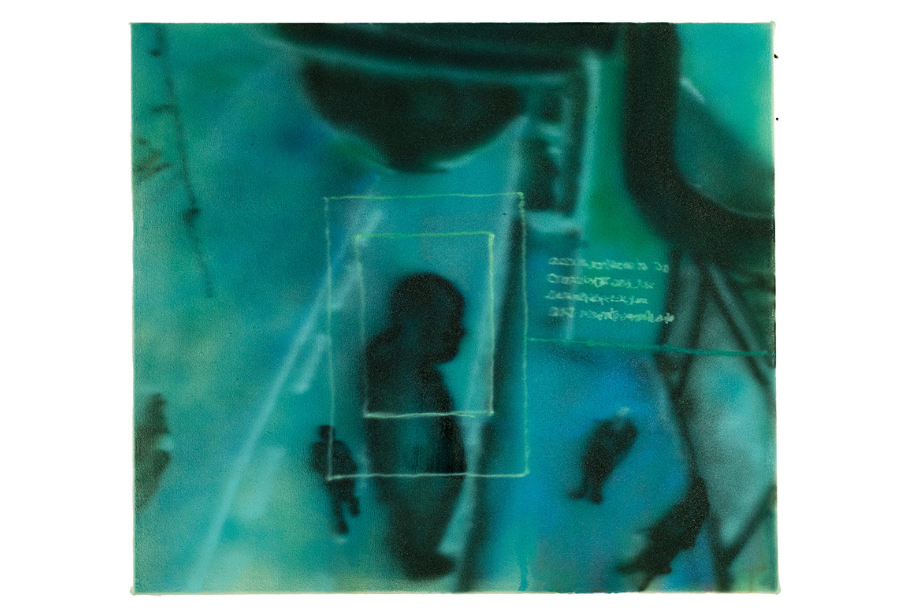
© Florent Tremblay, Complot et caméra, 2025.
As part of a partnership with UQAM’s École des arts visuels et médiatiques to highlight the work of a graduating student in the Bachelor of Visual and Media Arts program who incorporates new technologies, OBORO is hosting Florent Tremblay for a research residency. His project revolves around a central question: How can the repurposing of surveillance devices reveal the mechanisms of control that shape our relationship to images, data, and identity?
Driven by current issues surrounding cybersecurity, surveillance technologies, and the power dynamics they create, his residency will enable him to develop an immersive installation incorporating live video capture devices, modified cameras, 3D prints, algorithmic image-processing systems, sculptural elements, painted surfaces, and a sound composition.
Furthermore, with a keen eye for the interactions between the body, the machine, and the environment, the artist places spatial arrangement at the heart of his artistic practice and positions the audience in an ambiguous role—at once observer, observed subject, and participant in the work. In addition to filming its immediate surroundings in real time, the work transforms the video streams to track, abstract, and depersonalize nearby faces, thereby revealing detection and recognition processes that are usually invisible. The interplay between this real-time capture, algorithmic processing, and the sensory experience of the various media present within the installation questions the logic of data collection, facial recognition, and automated surveillance. The project thus seeks to make visible the technical and political infrastructures underpinning these technologies and to open up a space for critical reflection on their effects in public spaces and daily life.
© Florent Tremblay, Complot et caméra, 2025.
Holding a Bachelor’s degree in Visual and Media Arts from UQAM, Florent Tremblay explores the relationships between image, memory, surveillance, and the construction of contemporary narratives. Through a practice centered on painting, complemented by sculpture, video, and installation, he investigates the ways images contribute to the representation and understanding of bodies in space. His work approaches the city as a panoptic environment, where individuals move under a diffuse and constant gaze. He examines how systems of image capture, archiving, and circulation transform our relationship to intimacy, identity, and behaviour. By reappropriating imagery drawn from surveillance systems, he questions the mechanisms of control embedded within urban environments. He lives and works in Montreal.